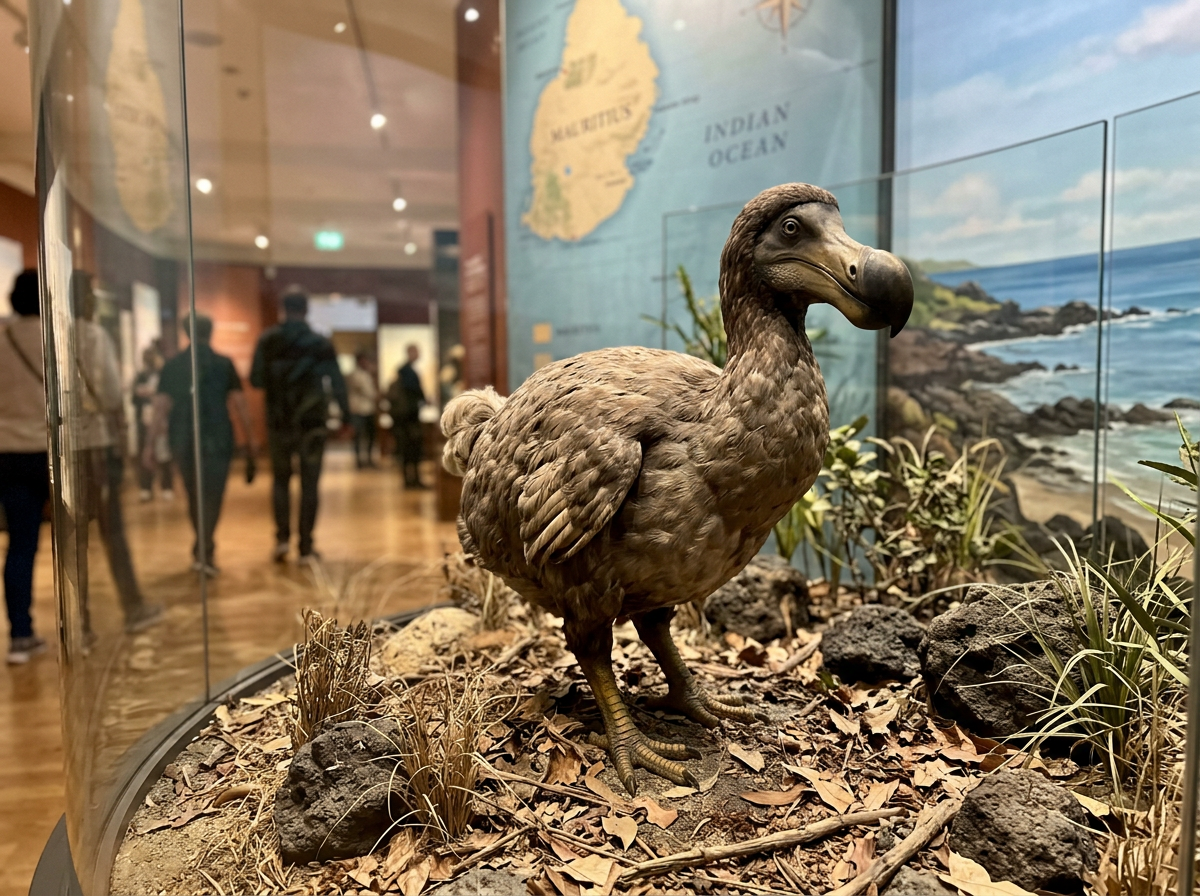
The dodo evolved from a pigeon-like flying ancestor that somehow crossed open ocean and landed on the island of Mauritius, then spent millions of years transforming into something almost unrecognizable: a large, flightless, ground-dwelling bird with stubby wings and no fear of predators. That transformation is one of the clearest examples of island evolution science has ever documented. Here is how it happened, what drove each change, and why understanding the dodo's evolutionary story matters beyond just a quirky extinct-bird fact.
How Did the Dodo Bird Evolve Flightlessness and Extinction

Maya Hennessy
23 Mar 2026
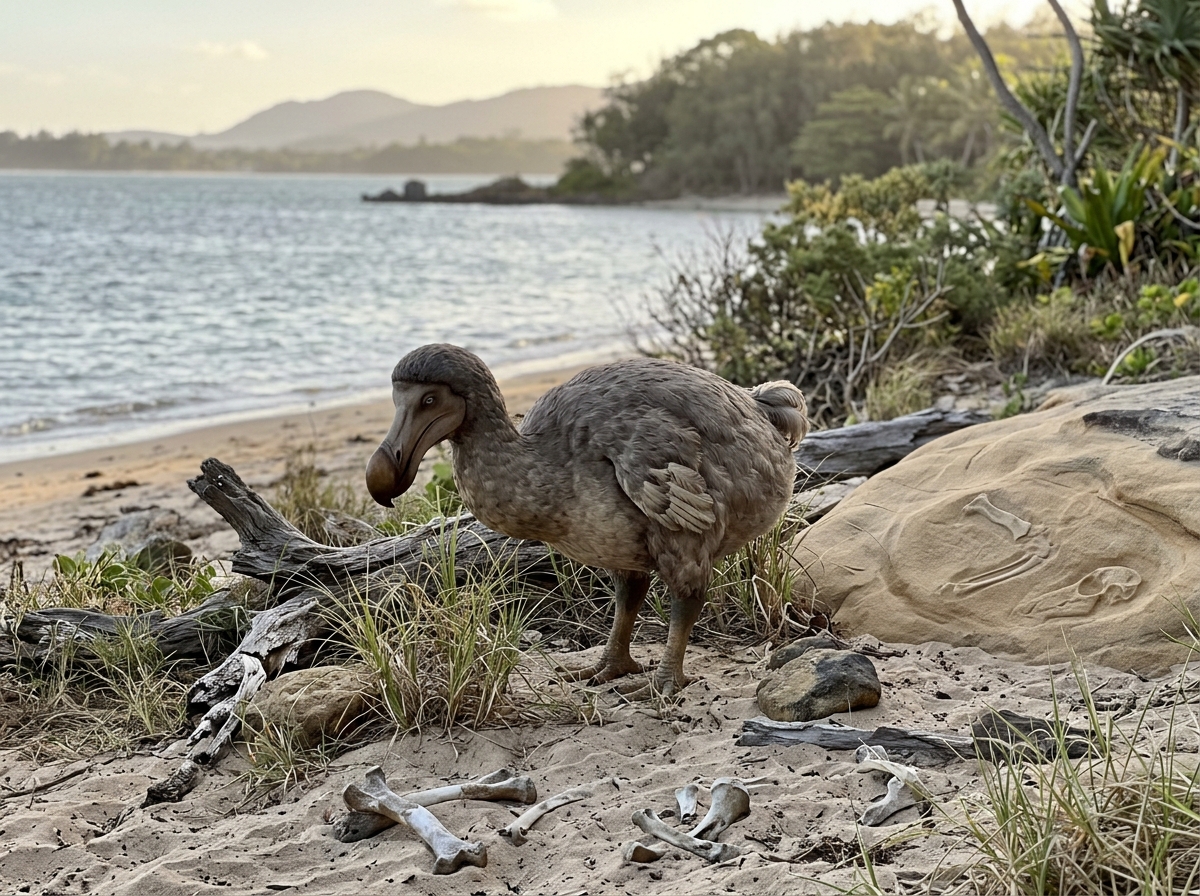
Where the dodo fits on the bird family tree
The dodo's scientific name is Raphus cucullatus, and its closest relatives are pigeons and doves. Taxonomically it sits within the order Columbiformes, and modern molecular phylogenetics confirms it belongs inside the family Columbidae rather than in some separate, isolated lineage. For a long time the dodo was placed in its own family or even its own order, but that was based on how weird it looked rather than on rigorous genetic analysis.
The key finding from mitochondrial genome research, including the work of Soares and colleagues in 2016, is that the dodo belongs to a subclade called Raphinae, which sits comfortably inside the columbid radiation. Its closest living relative is the Nicobar pigeon (Caloenas nicobarica), a striking, iridescent island-hopper found today across Southeast Asia and the Pacific. Crown pigeons (Goura species) appear as successive branches on nearby parts of the tree. If you want a living approximation of what the dodo's relatives look like, picture the Nicobar pigeon: a fairly large, ground-foraging pigeon with island biogeography in its DNA.
The evolutionary timeline: from flying pigeon to flightless giant
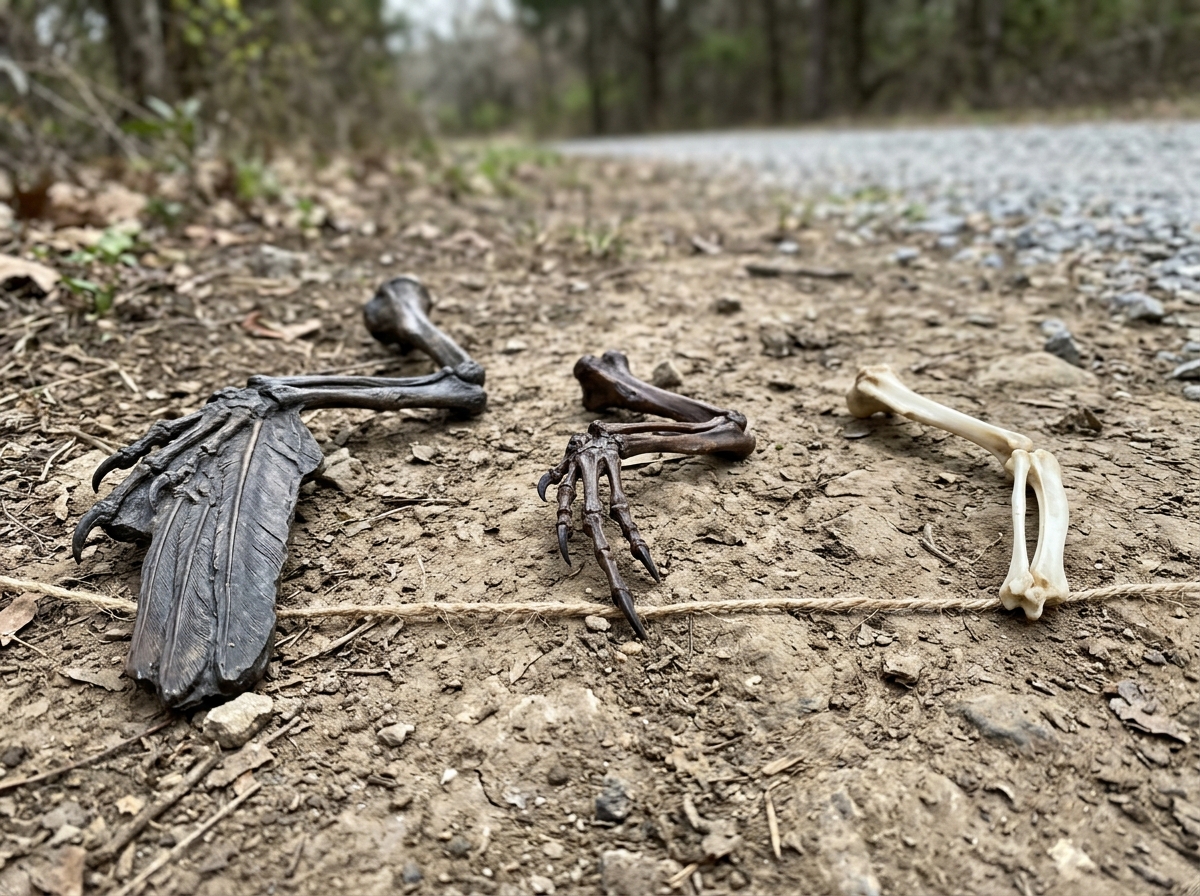
Pinning down the exact timeline requires reading both the fossil record and molecular clock estimates, and the two approaches broadly agree, even if the fine details are still debated. Here is what the evidence currently supports.
Deep divergence from Caloenas (around 18 million years ago)
Soares et al. estimated that the common ancestor of the dodo and the Rodrigues solitaire (its sister species on the neighboring island of Rodrigues) diverged from the Caloenas lineage roughly 18 million years ago, in the Miocene. Earlier molecular clock work by Shapiro and colleagues had pointed to a broadly similar deep divergence, placing it somewhere in the mid-to-late Eocene or Oligocene depending on the calibration. These deep dates do not mean the dodo was sitting on Mauritius 18 million years ago. They mean the lineage that would eventually produce the dodo split from the Nicobar pigeon lineage around that time.
Island colonization via stepping stones
Mauritius is a volcanic island in the Indian Ocean, part of the Mascarene archipelago. The current scientific interpretation is that the dodo's ancestor reached Mauritius by island-hopping across the Mascarene stepping stones, using older, now-submerged or shrunken volcanic islands as waypoints. Some comparative biogeographic work on Mascarene species uses these stepping-stone routes to explain how lineages with deep divergence times could still have colonized relatively young islands. The exact arrival date on what is now Mauritius is not directly recoverable from the current evidence.
Progressive loss of flight after arrival
Once a flying pigeon ancestor established itself on Mauritius, the island environment did the rest. With no mammalian predators and no ground-based threats, the selection pressure that makes flight energetically worthwhile simply relaxed. Flight is expensive: it requires large, heavy pectoral muscles, hollow but structurally demanding bones, and a nervous system finely tuned for aerial escape. When none of those traits improve survival, random mutations that reduce wing size or flight muscle mass are no longer weeded out. Over many generations, that relaxed selection accumulates into full flightlessness. Research across 80 island bird populations has shown this pattern is statistically predictable: the fewer raptors and mammalian predators present, the more investment in flight muscles declines. The dodo is one of the most dramatic examples of that trajectory.
How island life shaped everything about the dodo
Body size and form
The dodo grew large by pigeon standards, reaching roughly one meter tall and weighing somewhere between 10 and 18 kilograms depending on the season and individual. Body size on islands often tracks resource availability and predation regime: when predators are absent and food is consistent, larger body sizes can be advantageous for competitive access to food and for thermoregulation. The dodo's hindlimbs became stout and powerful relative to its body, which is the classic flightless-bird trade-off: as forelimbs (wings) reduce, hindlimbs that carry the full locomotion burden tend to enlarge. Studies on convergent flightlessness specifically describe this as a drastic reduction of flight muscles paired with enlargement of hindlimbs, and dodo skeletal anatomy fits that description well.
Diet and ecological role
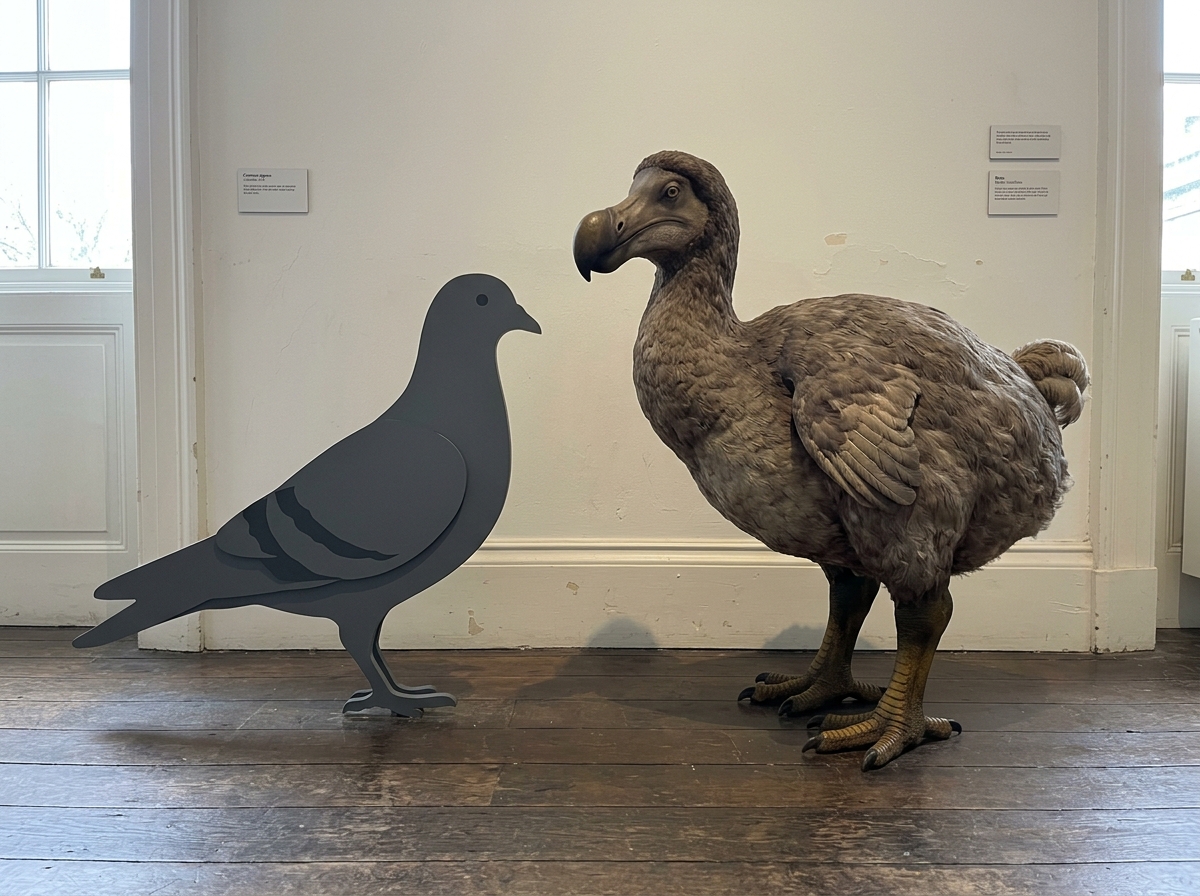
The dodo occupied a niche as a large fruit, seed, and plant consumer. The best direct evidence for this comes from the Mare aux Songes fossil site in Mauritius, a mid-Holocene bone Lagerstätte (a concentrated, exceptionally preserved fossil bed) where dodo remains are found alongside plant macrofossils, pollen, and other vertebrates. Analysis of this co-occurrence evidence paints a picture of the dodo as a key player in Mauritius's seed-dispersal ecology, moving large seeds through its gut in ways that no other species could replicate. Bone histology studies have added another layer by revealing growth patterns and life-history timing from dodo skeletal microstructure, providing ecological inference even when soft tissue and DNA are not recoverable.
Behavioral changes
The dodo's famous fearlessness toward humans was not stupidity. It was the logical behavioral outcome of evolving in an environment with no ground predators. Anti-predator behaviors are energetically costly and carry social and reproductive trade-offs. When predators disappear from an ecosystem, those behaviors relax under selection, sometimes within just a few generations. The dodo had millions of years on a predator-free island, more than enough time for wariness to become vestigial. This made it fatally naive when humans and their animals arrived.
What ended the dodo: the drivers of extinction
The dodo's extinction was rapid by any measure. If you want the timeline detail on exactly when it disappeared, If you want the timeline detail on exactly when it disappeared, that is covered in depth in the article on when the dodo bird went extinct, but the last reliably documented observation dates to around 1689. the last reliably documented observation dates to around 1689. The causes are interrelated and worth understanding in sequence. what happened to the dodo bird quizlet. did a dodo bird hatch recently
- Direct human hunting: Archaeological evidence, including isolated dodo bones found in cave shelter contexts with signs of human activity, supports documentary accounts of sailors and settlers hunting dodos for food. Ship provisioning logs describe dodos being taken on board as provisions, and the bird's fearlessness made it easy prey.
- Introduced mammals: Dutch settlers brought rats, pigs, cats, dogs, and other animals to Mauritius. These species devastated ground-nesting birds like the dodo, destroying eggs and chicks with no evolved defense in the dodo's behavioral repertoire to counter them.
- Habitat destruction: Human settlement transformed the Mauritius landscape through land clearing, agriculture, and resource extraction. The dodo's forest foraging habitat shrank rapidly after colonization began in earnest in the mid-17th century.
- Fragile island ecology: Because island ecosystems have fewer species and tighter ecological interdependencies than continental ones, disruption cascades quickly. Removing or suppressing the dodo also disrupted seed dispersal for plants that had co-evolved with it over millennia.
The combination of all four factors hit within a few decades of sustained human presence. A species that had survived millions of years of stable island conditions collapsed within roughly 80 years of intensive colonization. That is not a slow decline; that is an ecological shock the dodo had no evolutionary preparation for.
What fossils and genetics can (and can't) tell us
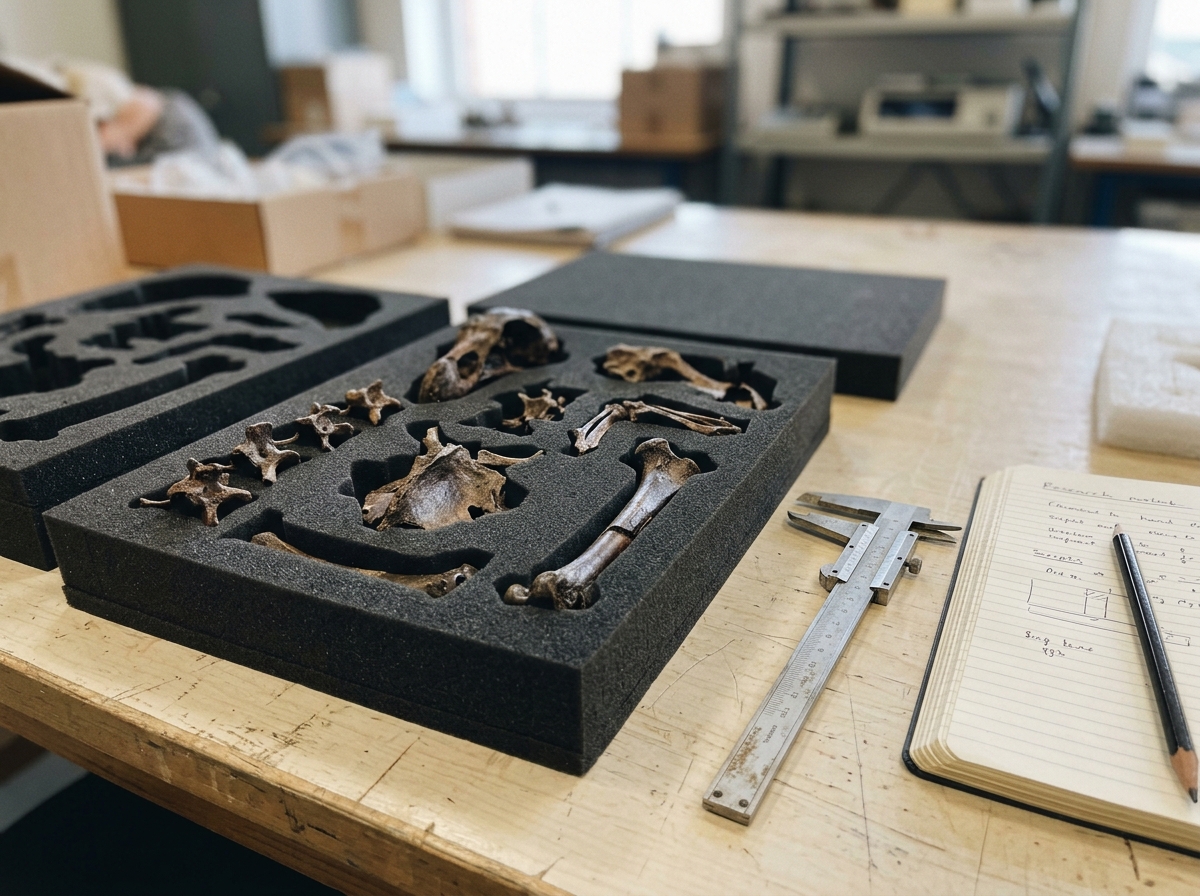
The primary physical evidence for the dodo comes from two places: museum specimens (bones, taxidermied remains, and a handful of soft-tissue examples) and the Mare aux Songes fossil site. The MAS site has produced a rich ~4,200-year-old bone bed containing Raphus cucullatus bones and fragments alongside other Mauritian vertebrates and plant material. Radiocarbon dating of 27 samples from this and nearby layers has given researchers a solid chronological anchor for pre-human dodo ecology.
On the genetics side, the 2016 mitochondrial genome work by Soares and colleagues successfully assembled complete mitogenomes for the dodo and Rodrigues solitaire using museum specimens, enabling rigorous phylogenetic placement and molecular clock estimates. This was a significant achievement. But ancient DNA work on Mauritian fossils is genuinely difficult: DNA from the dodo and other Mauritian vertebrates has proved hard to recover from the fossil material itself, likely due to the tropical preservation environment. This means fine-scale questions, like how the dodo population changed in size or genetics over the last few thousand years before extinction, are not currently answerable from DNA evidence.
There are also only five reliably documented live dodos that left Mauritius, meaning the museum specimens available for genetic work represent a very narrow sample of the original population. Bone morphology, histology, and contextual fossil ecology are currently carrying most of the interpretive weight. Researchers interested in questions about dodo DNA recovery and de-extinction prospects will find a direct discussion of that topic in the article covering dodo bird DNA.
| Evidence type | What it tells us | Key limitation |
|---|---|---|
| Complete mitochondrial genomes | Phylogenetic placement within Columbidae; divergence timing (~18 Mya from Caloenas) | Only mitochondrial DNA; nuclear genome detail is minimal |
| Fossil bone beds (Mare aux Songes) | Pre-human ecology, diet context, co-occurring species, chronology | Tropical conditions limit DNA preservation; no ancient population genetics |
| Bone histology | Growth patterns, life-history timing, ecological inference | Cannot directly reconstruct diet shifts through time |
| Museum specimens | Morphology, osteology, some soft tissue | Only ~5 reliably documented live individuals left Mauritius |
| Historical accounts and iconography | Behavior, appearance, approximate size, human impact timeline | Human depictions vary; accounts are often secondhand |
The dodo alongside other flightless island birds
The dodo is the most famous example of island flightlessness, but it is far from unique. The same basic evolutionary mechanism, relaxed predation pressure plus stable island resources, has produced flightless birds independently dozens of times across the world's islands. Comparing the dodo to other examples helps clarify which parts of its story are universal and which are specific to Mauritius.
| Species | Island/Region | Ancestor group | Flight status | Extinction status | Primary extinction driver |
|---|---|---|---|---|---|
| Dodo (Raphus cucullatus) | Mauritius | Columbidae (pigeons) | Fully flightless | Extinct (~1689) | Hunting, introduced species, habitat loss |
| Rodrigues solitaire (Pezophaps solitaria) | Rodrigues | Columbidae (pigeons, sister to dodo) | Fully flightless | Extinct (~1730s) | Hunting, introduced species |
| Moa (Dinornithiformes, multiple species) | New Zealand | Ratite lineage | Fully flightless | Extinct (~1400s) | Hunting by Maori settlers |
| Kiwi (Apteryx spp.) | New Zealand | Ratite lineage | Fully flightless | Endangered/vulnerable | Introduced predators, habitat loss |
| Flightless rails (various species) | Multiple Pacific islands | Rallidae | Fully or partially flightless | Many extinct, some surviving | Introduced predators, human disturbance |
| Kakapo (Strigops habroptilus) | New Zealand | Psittacidae (parrots) | Flightless | Critically endangered | Introduced predators, low reproduction |
The moa comparison is particularly instructive. New Zealand's moa species were large flightless birds that evolved over millions of years in the absence of mammalian predators, much like the dodo. When Polynesian settlers arrived in New Zealand around the 13th century, moa populations collapsed within roughly 100 to 200 years, a timeline hauntingly similar to the dodo's. Both cases illustrate the same vulnerability: an animal that evolved behavioral and morphological traits tuned to a predator-free environment cannot recalibrate fast enough when that environment suddenly changes.
Kiwis are an interesting contrast: they are also fully flightless New Zealand birds descended from ratite ancestors, but they have survived into the present, largely because of intense conservation intervention. They are nocturnal, burrowing, and have some behavioral wariness that gives them more flexibility than the dodo had. The fact that kiwis are still listed as endangered despite active conservation programs underlines how precarious island flightless birds remain once introduced predators enter the picture.
Flightless rails are perhaps the most striking demonstration of how frequently and predictably this evolution happens. Rails (family Rallidae) have gone flightless on islands across the Pacific so many times that researchers treat it as almost a default outcome when a rail colonizes a predator-free island. Studies on island bird populations across 80 populations confirm statistically that raptor richness and mammalian predator presence are the best predictors of how much flight-muscle investment a bird lineage will retain. The dodo fits that model precisely.
The bigger picture and where to go next
The dodo did not evolve badly. It evolved perfectly for the environment it actually inhabited for millions of years. A large, confident, ground-foraging pigeon descendent with no need to fly was exactly what Mauritius selected for. What the dodo could not survive was the speed of human-driven ecosystem change, which arrived faster than evolutionary adaptation can operate. That asymmetry between ecological disruption speed and evolutionary response speed is the same reason so many island species are endangered or gone today.
If you want to explore the dodo's story further, the articles on where the dodo bird was found and [which bird became extinct in Mauritius in the 17th century](/dodo-species-facts/which-bird-became-extinct-in-mauritius-in-the-17th-century) provide geographic and historical depth. For the broader question of how flightlessness evolved across bird lineages and what Darwin's work on island birds revealed about evolution more generally, the article on what bird Darwin studied connects those threads directly.
FAQ
Did the dodo evolve flightlessness immediately after its ancestor reached Mauritius, or did it take millions of years?
It likely took a long, gradual period. Flightlessness traits can start developing as soon as predators are absent, but the complete suite of changes, such as reduced flight muscles and altered body proportions, accumulates over many generations as selection consistently favors ground life.
How do scientists know the dodo’s closest living relative is the Nicobar pigeon, not just a superficial resemblance?
They use molecular phylogenetics, meaning DNA sequence data from mitochondrial genomes and other genetic markers to build evolutionary trees. The Nicobar pigeon fits the dodo’s placement because it emerges as the nearest branch in that genetic framework, not because of shared appearance.
If the lineage split from the Nicobar pigeon around 18 million years ago, does that mean the dodo itself lived that long on Mauritius?
No. That timing refers to the divergence of lineages, not the arrival of the ancestor on Mauritius. The ancestor could have reached the island much later, and the article notes that the arrival date on the now-current Mauritius surface is not directly recoverable from current evidence.
Could the dodo have been flightless even before it lost its fear of predators?
The likely sequence is that morphological changes and behavioral changes can reinforce each other over time. Initially, reduced need for flying could relax traits related to flight, and over many generations, reduced exposure to ground threats would further relax wariness. With humans present, both sets of traits would become liabilities quickly.
What human-related factors mattered most in the dodo’s extinction, and why did the decline happen so fast?
The article frames it as an interrelated collapse tied to sustained human presence, occurring within about 80 years. A key practical point is that dodos evolved under stable island conditions, so they lacked defenses against rapid new pressures like hunting and introduced animals, which together can destabilize reproduction and survival faster than adaptation can occur.
Why is it hard to extract dodo DNA from fossils, and what would be different if DNA were recoverable?
Tropical preservation can degrade DNA molecules quickly, so the article notes DNA from Mauritian fossils has been difficult to recover. If workable DNA were available, researchers could potentially track changes in population size, relatedness, and genetic diversity closer to extinction, which is currently not answerable from DNA evidence.
Were there many dodos when humans arrived, or are museum specimens just reflecting a small population?
The genetic work is based on a very narrow sample, because only five reliably documented live dodos are known to have left Mauritius. That does not automatically mean the on-island population was tiny, but it does constrain how directly researchers can infer genetic variation from the surviving specimen set.
Is the stepping-stone “island hopping” route required to explain dodo evolution, or could it have happened differently?
Island hopping is the prevailing interpretation that fits the geological history of the Mascarene archipelago, but the exact arrival date cannot be recovered directly. Alternative routes would need to still account for deep lineage divergence times and the geographic likelihood of colonizing Mauritius from nearby ancestors.
Do other island birds evolve flightlessness the same way as the dodo, or are dodo-like cases special?
The broad mechanism is similar, relaxed selection when predators are absent and resources are stable. However, island ecology differs by species and island, so details such as how quickly flightlessness develops or how large a bird becomes can vary depending on predation intensity, food consistency, and habitat structure.
Could conservation have prevented the dodo’s extinction if it had existed today?
Probably not in a simple, direct way. Once introduced predators and human impacts rapidly altered the ecosystem, the time window for adaptation was short, and dodos had reduced anti-predator defenses. Modern conservation might help only with early intervention, predator control, habitat protection, and a surviving reproductive population.
Next Article
What Happened to the Dodo Bird on Quizlet and Why
Dodo extinction explained with a clear timeline, plus how to find or verify updated Quizlet flashcards and quizzes.