Quick answer: did the dodo really go extinct (and when)?
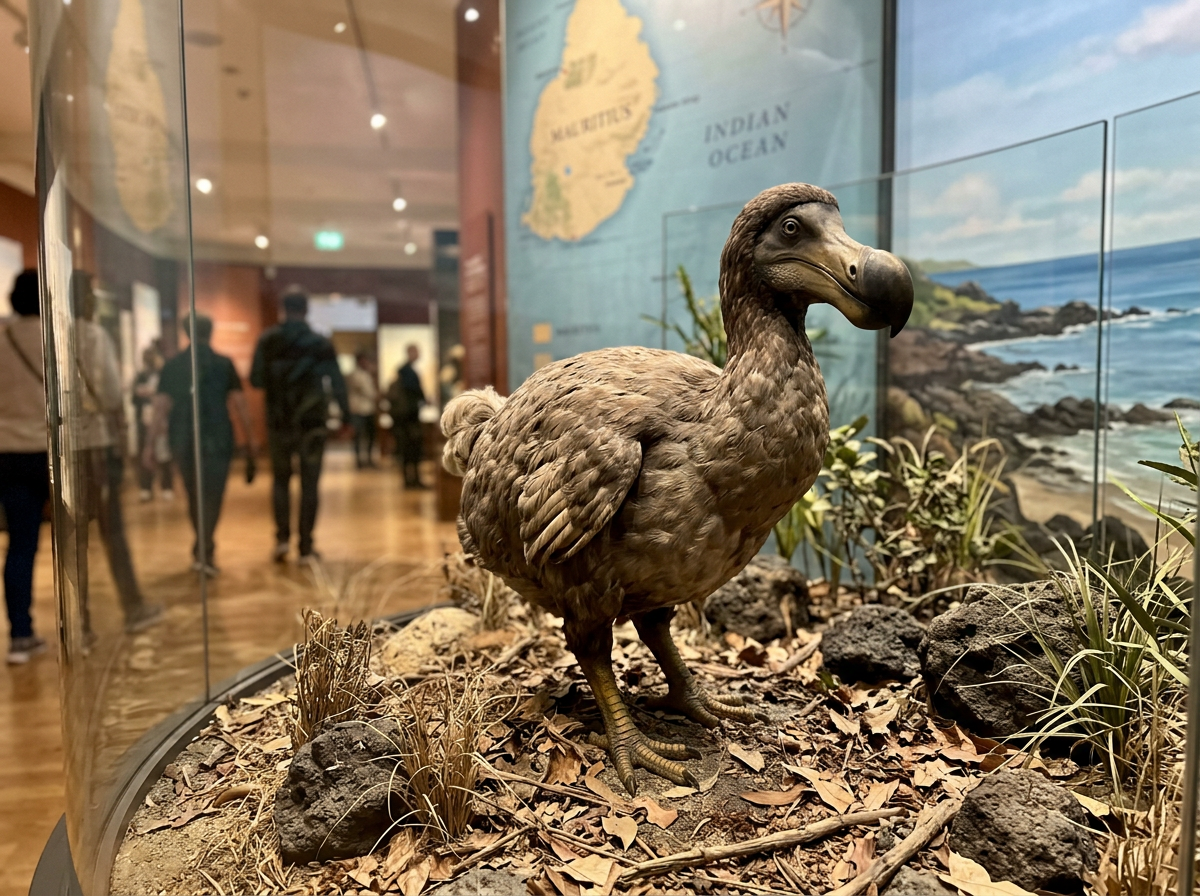
Yes, the dodo (Raphus cucullatus) is genuinely, completely extinct. The last widely accepted sighting was recorded in 1662, when a Dutch sailor named Volkert Evertsz, aboard the ship Arnhem, encountered dodos on a small offshore islet near [where was the dodo bird found](/dodo-species-facts/where-was-the-dodo-bird-found). That account is the one scientists and natural historians most consistently point to as the confirmed final record. Some accounts push the date to 1681, and there is genuine scholarly debate about which reports are reliable, but the scientific consensus is clear: the dodo disappeared during the second half of the 17th century, and not a single wild dodo has been seen since. did a dodo bird hatch recently. which bird became extinct in mauritius in the 17th century
The Natural History Museum frames the 1662 sighting as the key reason the dodo became the defining symbol of human-caused extinction. It is not a myth, not an exaggeration, and not a story with a happy ending where a population survived somewhere undetected. The dodo is gone. What remains are bones, a handful of museum specimens, historical illustrations, and a growing body of genetic and paleontological research that tells us more about the bird than its contemporaries ever documented while it was alive.
Timeline of what happened to the dodo after humans arrived

The dodo's story is a fast collapse. Mauritius, the island where dodos lived, was uninhabited by humans for most of the bird's evolutionary history. That isolation is exactly why the dodo became so vulnerable the moment people showed up. how did the dodo bird evolve That isolation is exactly why the dodo became so vulnerable the moment people showed up.
- Late 1500s: Portuguese sailors were likely the first Europeans to encounter Mauritius, though they did not establish a permanent settlement. Early accounts mention large, slow-moving birds that were easy to catch.
- 1598: Dutch sailors landed on Mauritius and left some of the earliest written and illustrated records of the dodo. These accounts describe a bird that showed no fear of humans, a trait that would prove catastrophic.
- 1638: The Dutch established a formal colony on Mauritius. Human settlement brought direct hunting pressure but, crucially, it also brought animals that would do even more damage than hunters.
- 1638 to 1660s: Introduced mammals, including pigs, dogs, cats, black rats, and crab-eating macaques, spread across the island. Dodos nested on the ground, which made their eggs and chicks completely defenseless against these predators.
- 1662: Volkert Evertsz records the last widely accepted encounter with living dodos on an offshore islet. The birds on the mainland were almost certainly already gone by this point.
- 1681: Some accounts mention a possible later sighting, but this date remains contested in the scientific literature. The 2014 Historical Biology study notes that nearly all authors treat the Evertsz 1662 account as the definitive final record.
- 17th century onward: Because formal scientific study of Mauritius's fauna only began after the dodo was already extinct, researchers have had to reconstruct the bird's ecology almost entirely from historical mariners' accounts, sketches, and, more recently, fossil and genetic evidence.
The speed of the collapse is striking. From the first permanent Dutch settlement to the last confirmed sighting was roughly 24 years. That is how quickly an isolated island species with no instinct to fear predators can be pushed off the edge.
Why the dodo declined: invasive species, hunting, and habitat change
Most people assume hunters ate the dodo into extinction, but the science tells a more complicated story. Hunting played a role, but the 2015 peer-reviewed review in the Journal of Vertebrate Paleontology makes a compelling case that introduced animals were likely the primary driver of collapse. Here is how each factor contributed.
Introduced predators targeting eggs and chicks
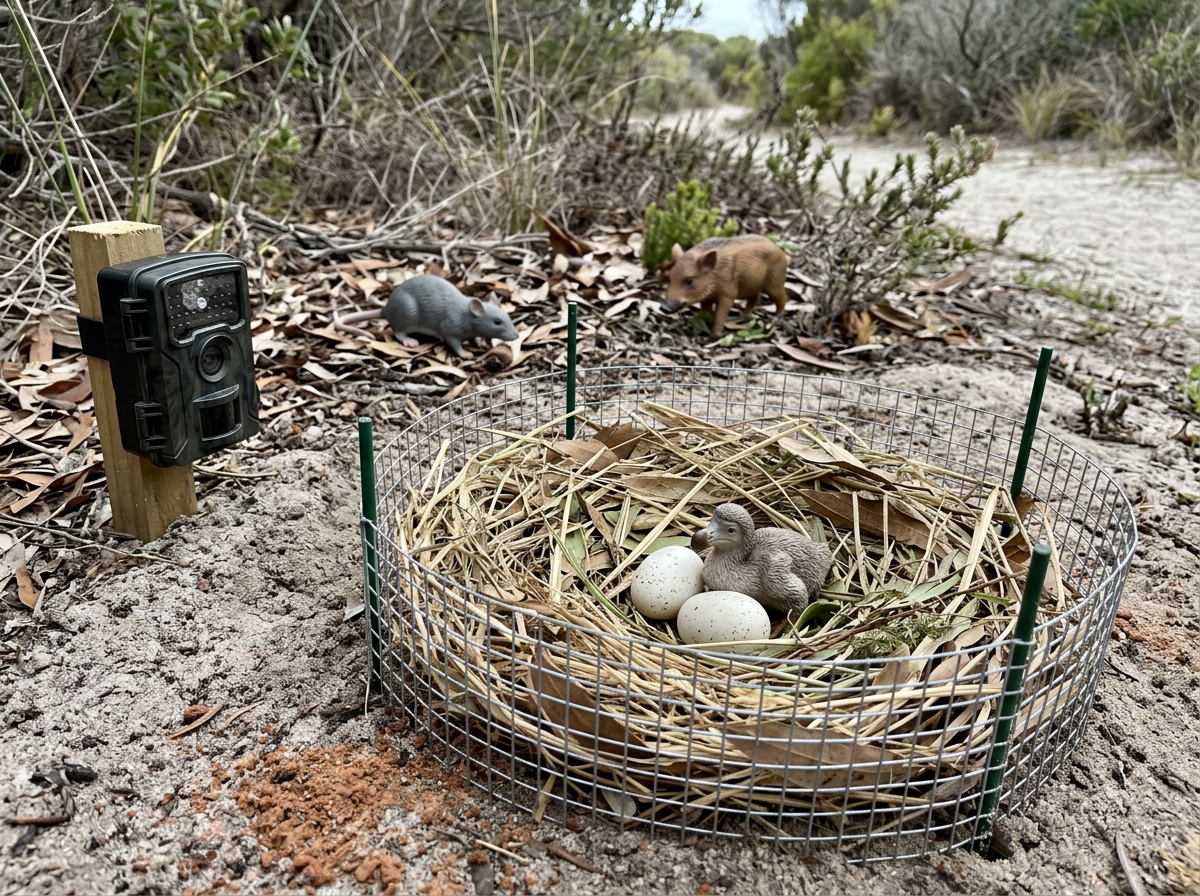
The dodo nested on the ground and, as far as researchers can tell, laid a single egg per clutch. That reproductive strategy works fine on an island with no ground predators. It becomes a death sentence the moment pigs, black rats, and crab-eating macaques arrive. All three of these species are documented egg and chick predators. The 2015 review specifically names pigs, macaques, and black rats as the animals most responsible for destroying dodo nests before chicks could survive to adulthood. The New Yorker's reporting on dodo paleontology draws the same conclusion: the damage was done less by human hunters than by the animals humans brought with them.
Habitat destruction and competition for food
Pigs and goats did not just eat dodo eggs. They also destroyed the understory vegetation of Mauritius, competing with dodos for fruit and other food sources. The Natural History Museum connects this kind of cascading habitat disruption directly to the dodo's extinction, and notes that the same pattern, invasive species plus habitat change, continues to threaten island biodiversity today. The dodo was an ecological specialist adapted to a very specific island environment. Once that environment was destabilized, the bird had nowhere to fall back to.
Direct hunting by humans
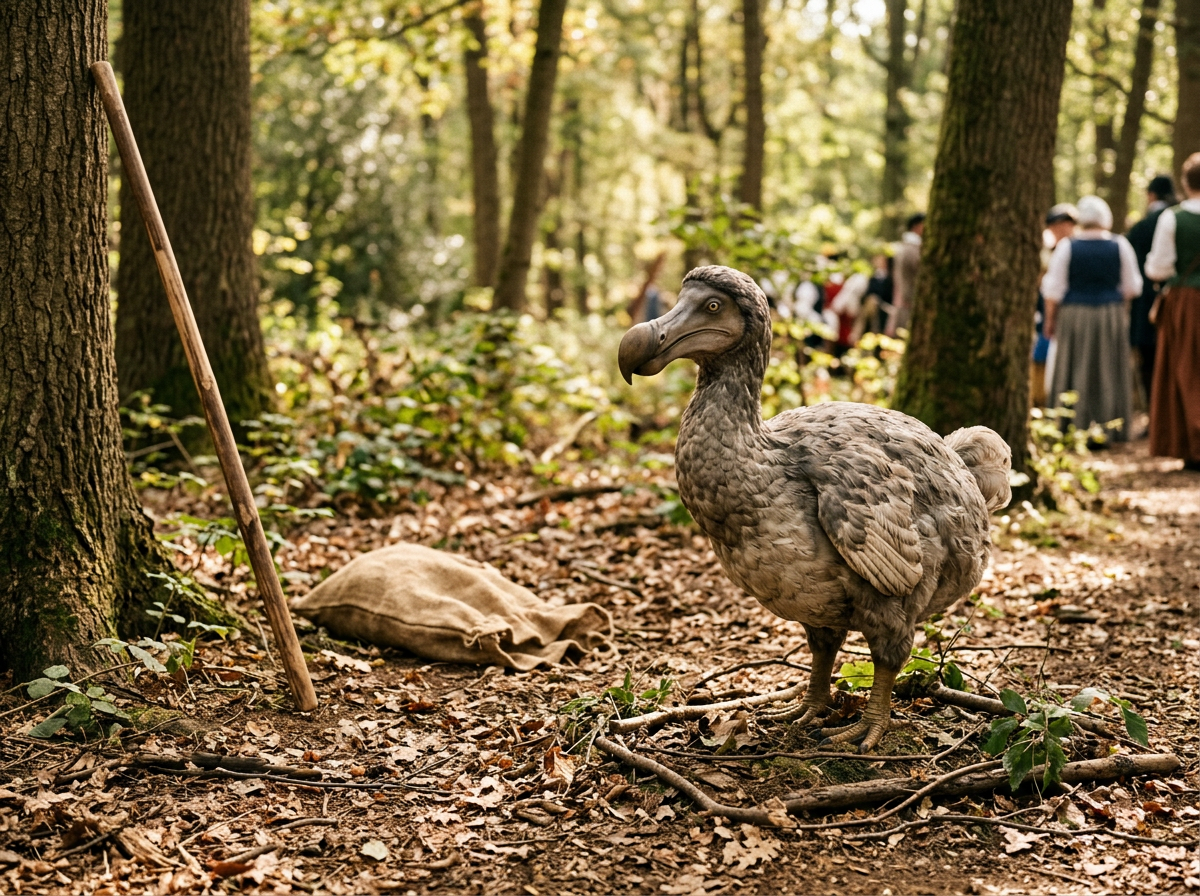
Early accounts describe dodos as completely unafraid of humans, which made them easy to catch and kill. Sailors did hunt them, and the birds' meat was reportedly not particularly good, but that did not stop crews from taking them. However, researchers now believe direct hunting was a secondary pressure rather than the main cause of extinction. The introduced animals worked around the clock, year-round, attacking every generation of eggs and chicks. Human hunters were seasonal and opportunistic by comparison.
| Extinction Driver | Main Mechanism | Severity (per 2015 review) |
|---|
| Introduced pigs | Ate eggs/chicks, destroyed understory vegetation | High |
| Black rats | Ate eggs and chicks at ground-level nests | High |
| Crab-eating macaques | Predated eggs and chicks | High |
| Goats and other grazers | Competed for food, degraded habitat | Moderate |
| Direct human hunting | Killed adult birds opportunistically | Moderate |
| Habitat clearance for settlement | Reduced available nesting and foraging area | Moderate |
What "Quizlet" likely refers to + why a set might be missing
If you searched "what happened to the dodo bird Quizlet," you were almost certainly looking for a specific flashcard set or quiz on Quizlet, the popular study platform used by students and teachers. Maybe a teacher shared a link, or you found a set that helped you study for a test, and now you cannot find it. That happens more often than you might think, and there are a few clear reasons why.
- The creator changed the set's visibility: Quizlet sets are public by default, but any creator can switch a set to private or class-only at any time. A link that worked last semester may now return an error if the creator locked it down.
- The set was removed for copyright: Quizlet removes flashcard sets when it receives a DMCA copyright notice from a publisher claiming the content infringes on their material. This can happen to sets containing textbook questions or proprietary content, and the removal is permanent unless the creator successfully disputes it.
- The creator deleted or unpublished the set: If someone made a set for a class and then removed it after the semester ended, the link simply stops working.
- The set was never published: Quizlet's own troubleshooting guidance notes that a creator sometimes forgets to publish a set, meaning it exists in draft form but is invisible to anyone else.
- The link is outdated: Set URLs can change when creators rename or reorganize their content, even if the set itself still exists.
None of these scenarios mean the information about the dodo is gone from Quizlet entirely. They just mean that one specific set is no longer accessible via the link you had. There are almost always other sets covering the same material, and finding them takes a slightly different search approach.
How to find the dodo Quizlet materials today (search tactics)

Quizlet's search works differently from Google, so the way you phrase your query matters. Here are the most effective tactics for finding dodo-related flashcard sets right now.
- Search by keyword on Quizlet directly: Go to quizlet.com and type keywords like "dodo bird extinction," "dodo Raphus cucullatus," or "extinct birds" into the search bar. Quizlet's help documentation confirms that keyword searching is the primary way to surface relevant sets. Using the scientific name (Raphus cucullatus) is particularly useful because it filters results toward biology-focused sets rather than general trivia.
- Search for broader topic sets: Not every dodo-related flashcard deck is titled with the word "dodo." Sets tagged or titled "extinct birds," "island extinction," "flightless birds," or "17th century natural history" often include dodo content. A live Quizlet set categorized under "extinct birds" has been confirmed to include a dodo bird entry.
- Search by the creator's username: If you remember who shared the original set (a teacher or classmate), searching by their Quizlet username is more reliable than searching by set title. Quizlet's own help center recommends this approach because usernames stay consistent even when set titles or URLs change.
- Use Google to find Quizlet sets: Search Google for: site:quizlet.com "dodo bird" or site:quizlet.com "Raphus cucullatus". This often surfaces sets that Quizlet's own internal search buries.
- Check your Quizlet study library: If you previously saved or studied a set, it may still appear in your personal library even if the public link is broken. Log in and search your library by keyword.
- Look for course-specific sets: If you are studying for a specific class, search Quizlet using your textbook name or course title alongside "dodo" or "extinction." Sets built around popular biology or environmental science textbooks often cover this material.
If you exhaust all of these approaches and still cannot find a suitable Quizlet set, the practical next step is to build your own. It takes about ten minutes, and you will end up with a set that matches exactly what your course or exam requires. The factual content in the sections above, combined with the verification tips below, gives you everything you need to populate accurate flashcards.
How to verify dodo facts and avoid common myths
Quizlet sets are created by individuals, which means the quality varies enormously. Some sets are excellent. Others contain factual errors, outdated information, or outright myths. Before you use any flashcard set to study, it is worth checking a few key facts against reliable sources.
Common myths to watch out for
- Myth: Humans hunted the dodo to extinction by eating it. Fact: Hunting contributed but introduced predators (especially pigs, rats, and macaques destroying nests) were the primary drivers, according to the 2015 Journal of Vertebrate Paleontology review.
- Myth: The dodo was stupid because it did not run from humans. Fact: The dodo evolved on an island with no ground predators. It had no reason to fear large animals. That is adaptation, not stupidity.
- Myth: The dodo went extinct in the 1500s. Fact: The last confirmed sighting was 1662. The species survived into the second half of the 17th century.
- Myth: A dodo egg recently hatched and the species is being revived. Fact: No wild dodo has hatched. De-extinction research is ongoing, and scientists have recovered dodo DNA from museum specimens, but living dodos do not exist. News items about "reviving" the dodo refer to speculative genetic research, not a hatched bird.
- Myth: We have no dodo DNA. Fact: Scientists have successfully extracted and analyzed dodo genetic material from preserved museum specimens, including soft tissue. Scientific American reported on DNA work using an "Alice in Wonderland Dodo" specimen, and genetic sequencing in 2016 reinvigorated research into the bird's evolutionary relationships.
Reliable sources to cross-check flashcard facts
For quick fact-checking, the Natural History Museum's dodo explainer is one of the best freely available resources. It is grounded in primary historical documentation and gives a clear account of the Mauritius environment where dodos lived. For quick fact-checking, the Natural History Museum's dodo explainer is one of the best freely available resources. It is grounded in primary historical documentation and gives a clear account of the Mauritius environment where dodos lived. Britannica's dodo entry is another solid starting point, particularly for biological and taxonomic basics. For deeper reading, the 2015 review in the Journal of Vertebrate Paleontology ("A review of the dodo and its ecosystem") is the most comprehensive scientific synthesis currently available, covering historical accounts, ecosystem reconstruction, and introduced-species mechanisms in a single paper. For deeper reading, the 2015 review in the Journal of Vertebrate Paleontology ("A review of the dodo and its ecosystem") is the most comprehensive scientific synthesis currently available, covering historical accounts, ecosystem reconstruction, and introduced-species mechanisms in a single paper.
Next-step reading on dodo history and conservation lessons
Once you have the basics down, there is a lot more to explore. The dodo's story connects to some genuinely important ideas in conservation biology, island ecology, and even de-extinction science.
On this site, you can dig deeper into several threads that branch off from the dodo's history. The exact extinction date is more contested than most textbooks suggest, and a closer look at when the dodo bird went extinct gets into the fascinating and frustrating problem of documenting species loss in the pre-scientific era. If you are curious about where the dodo lived and what made Mauritius such a unique evolutionary environment, the island's geography and ecology explain a lot about why the dodo became so specialized and so vulnerable. For the genetics angle, the question of whether we have dodo bird DNA is now answerable with a qualified yes, and the science behind that is worth understanding before accepting headlines about de-extinction at face value.
The broader conservation lesson the dodo teaches is not just historical. The Natural History Museum has documented how species losses on Mauritius continue to cascade through the ecosystem today, pushing native plants toward extinction because the animals that dispersed their seeds are gone. The dodo is not just a cautionary tale about one bird. It is a case study in how quickly an island ecosystem can unravel when isolated species meet introduced pressures for the first time. That pattern has repeated itself dozens of times since 1662, and understanding it is one of the most useful things you can take away from studying the dodo.
If you are building a Quizlet set or study guide, the most useful framing is to organize facts around three questions: What was the dodo's environment before humans arrived? What changed when humans and their animals showed up? And what does modern science (genetics, paleontology, ecosystem research) tell us that 17th-century observers could not have known? That structure gives you a narrative that is accurate, memorable, and genuinely interesting to study rather than just a list of dates to memorize.